


I recently spoke with a client about wine pricing.
We were looking at their ex-cellar price, where the wine sat in the market, and what would actually make buyers more interested.
The obvious assumption is that a lower price will generate higher demand. Having interacted with wine buyers, many find it cheaper, which likely attracts more importers, merchants, and consumers.
But the more we talked about it, the less convincing that idea became.
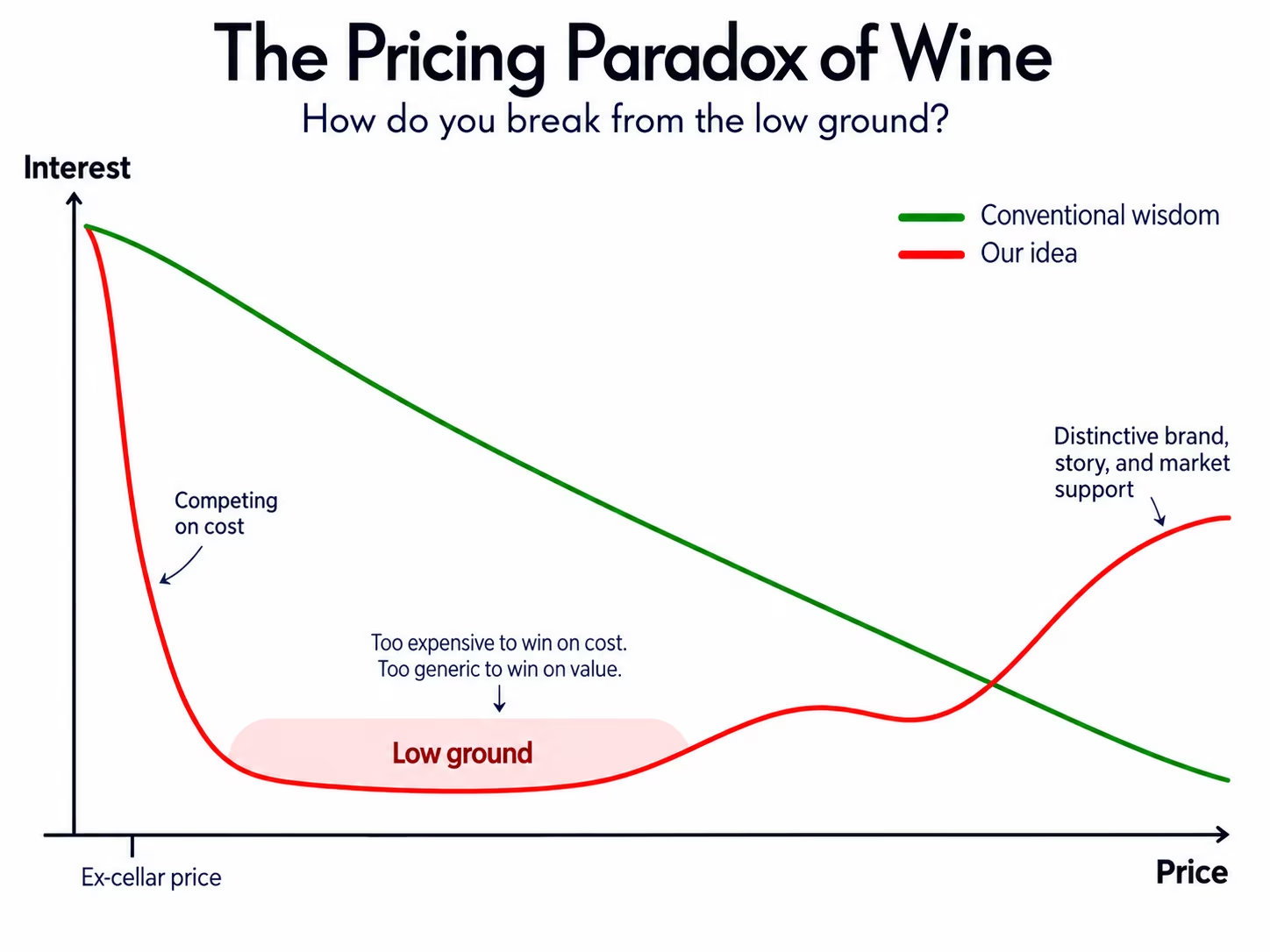
I ended up drawing a very simple graph.
On one axis: price.
On the other: interest.
The conventional wisdom is a straight downward line. As price increases, interest falls. And then, in some cases, it rises, often because the wine is generally great or because a high-ticket wine has a lot of PR interest.
There is a low ground in the middle where interest can actually disappear.
The wine is not cheap enough to compete with large commercial producers, but it is not distinctive enough to justify a more premium position. It sits in a crowded band where buyers already have dozens of alternatives.
That is where the problem starts.
At this level, a winery can easily believe that the problem is the ex-cellar price. Maybe one euro less will help. Maybe a bigger discount will unlock the importer.
Sometimes it will, if the price is really good. But often, it simply makes the wine look cheaper and/or easier to compare with other options. A winery with a great story gets diluted.
And once a wine becomes comparable, price starts doing all the work.

The answer is not necessarily to make a more expensive wine.
It is to give the market a stronger reason to accept a higher price.
This is where branding becomes commercial, not cosmetic.
A winery has to make clear why its wine is different. Why this vineyard? Why this producer? Why this method? Why this region? Why this bottle rather than the ten others an importer has just tasted?
If that difference is not visible, the buyer will naturally compare on price.
The second part is wine marketing.
A higher ex-cellar price needs support around it. Better account placement. Stronger trade storytelling. Better sales materials. More coherent packaging. More visibility with the right sommeliers, merchants, journalists, and buyers.
The market needs signals that confirm the price.
Because premium pricing is not just about what the wine costs to produce. It is also about what the market believes the wine is worth.
That doesn't mean every winery should move upward.
If you genuinely want to compete at the lower end, that is a valid strategy. But then you need to understand the game: scale, logistics, efficiency, distribution, and volume become critical.
The danger is sitting between the two.
Too expensive to win on cost.
Too generic to win on value.
So the question I left my client with was not:
How low can we price this wine?
What do we need to build around this wine so the market understands why it is worth the price?
That is not just a pricing question.
It is a positioning question.
Thoughts from a Wine Marketing & PR Agency
Observations from the conversations, decisions and problems we see every day in wine.