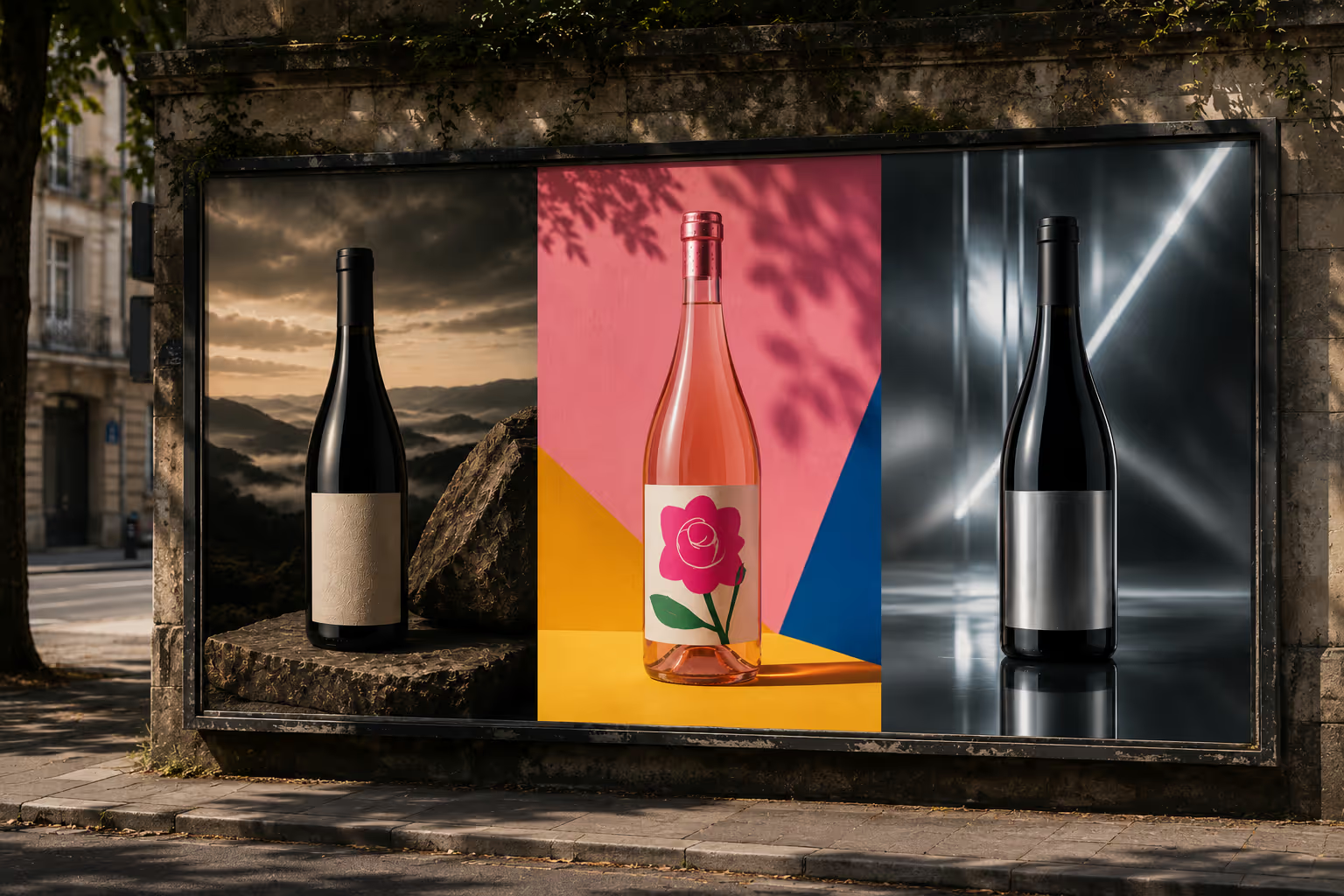
Why do websites like that of Gaja or Egon Muller work for them and not for other brands? How does the layer of mystery around those brands play in their favour? This is part of the Winery Brand Personality, how clients perceive them, and how they get educated about their wines.
There is a lot more afoot here than a simple landing page; the work done by those wineries in communication has unfolded over the decades to ensure that consumers, sommeliers, and collectors alike know their story. This is part of their personality, a touch of magic, mystery and adventure. It feels like you discover something amazing once you get access to it all.
That is where wine brand personality matters and how it plays a part in the positioning and success.
A wine brand personality is the set of human traits a winery expresses through its identity, behaviour, tone of voice, visual world, and customer experience. It is the emotional character people attach to the brand over time.
In practical terms, it answers questions such as: Does this winery feel authoritative or exploratory? Refined or rebellious? Scholarly or convivial? Old-world in posture, or modern in spirit? Brand personality is not a slogan. It is the pattern of signals a winery sends, repeatedly, across every touchpoint.
This matters because wine is not bought for its quality alone, not in this day and age. Wine covers a set of emotions that resonate with consumers. Before a customer tastes the wine, they read the label, analyse the price, the back label, the merchant note, the social proof, the website, and often the person presenting it. In other words, they get influenced by the personality first.
People do not form lasting attachments to technical specifications alone. They form attachments to meaning, feeling, and identity. In wine, that effect is intensified because the category is crowded, symbolic, and full of substitutes.

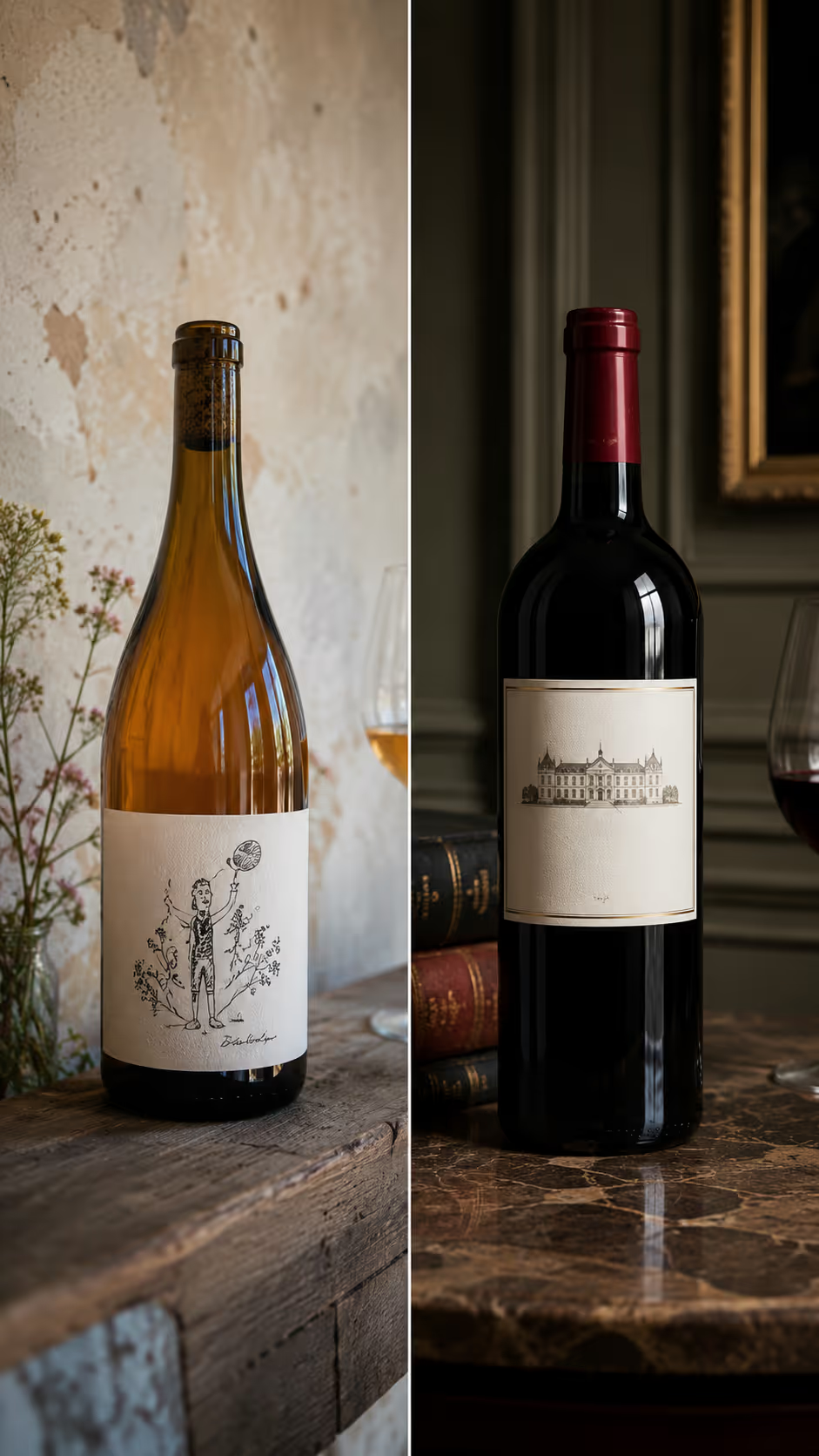
Wine is a product of place, but it is also a product of interpretation. A new winery may know its soils, exposure, clones, élevage, and farming philosophy in meticulous detail. That is necessary. It is not sufficient.
The market does not experience a winery as a vineyard map. It experiences a winery as a set of impressions.
This is especially important for a new winery. An established estate may inherit recognition, distribution, and a degree of trust earned over time. A new winery has no such luxury. It must build familiarity from scratch while competing against names with decades, sometimes centuries, of accumulated meaning.
That is why winery branding cannot stop at design. A new winery needs to decide how it wishes to be perceived and remembered. Otherwise, the market will do that work on its behalf, usually badly.
"Your brand is what other people say about you when you're not in the room."
— Jeff Bezos
In wine, that room may be a buyer tasting, a sommelier briefing, a retailer shelf, or a dinner table. If the winery has no clear personality, the market fills in the blanks with assumptions.
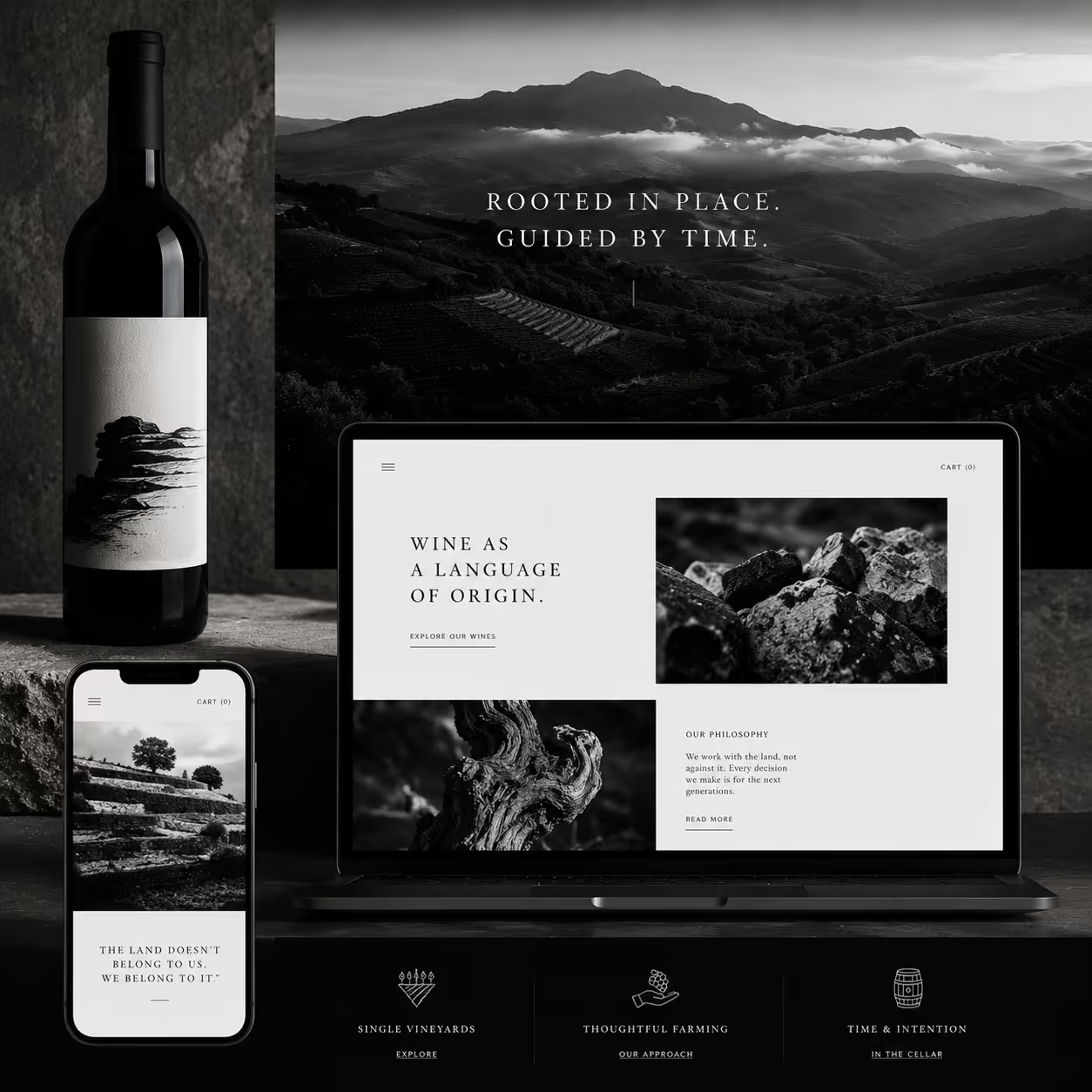
One of the biggest mistakes in winery branding is to treat personality as a secondary offset rather than as added value.
Personality affects whether a bottle feels like a £18 or £48 purchase. It affects whether a sommelier remembers the producer. It affects whether a distributor believes the winery has long-term potential or is simply another label to add to the pile. It affects whether a customer sees coherence between price, promise, and presentation.
For example, a terroir-driven new winery that wants to sell on craftsmanship, precision, and scarcity cannot present itself with generic lifestyle language and design cues borrowed from mass-market wines. The personality and the commercial ambition would be in conflict.
Equally, a modern founder-led estate trying to attract younger drinkers into a lesser-known region may be damaged by presenting itself with overly stiff, heritage-heavy codes it has not earned. The problem is not tradition itself. The problem is misalignment.
A winery does not need to invent a false persona. It needs to articulate its real one.
This is where the subject becomes more strategic.
A winery's personality should influence how it goes to market. If the brand feels intimate, founder-led, and direct-to-consumer, that may be an especially strong early channel. If it feels highly referential, place-driven, and built for sommelier advocacy, selective on-trade and specialist merchants may matter more. If it is polished, giftable, and easy to understand, premium retail may be viable sooner.
Route-to-market decisions are shaped by how easily a brand can be explained, trusted, and sold.
Distributors rarely buy wine on romance alone. They buy confidence, sell-through potential, clarity of proposition, and support. A winery with a defined personality gives the trade something usable. It helps answer: who is this for, why now, at what price, and with what story?
That is why personality is not only a consumer tool. It is a trade asset.
For a new winery, exploring brand personality means asking disciplined questions early:
This exploration often reveals tension. A founder may see the winery as artisanal and intimate, while the existing materials make it look corporate and distant. Or the winery may believe it is premium, while its touchpoints signal functional and interchangeable. Those gaps are precisely why the work matters.
"The privilege of a lifetime is to become who you truly are."
- Carl Jung
At Trellage, we see wine brand personality as a strategic trait, not a surface-level exercise. It sits between product story and market understanding. It helps a winery decide how to present itself, who to attract, how to price, what channels to prioritise, and what kind of long-term reputation it is building.
A winery brand personality is not about sounding more interesting. It is about becoming more legible, more coherent, and more valuable over time.
Brand personality is not the finishing touch. It is the foundation.
Most wineries arrive at the question of personality too late, after the label is printed, after the website is live, after the first distributor meeting has already gone sideways. By then, the market has already formed an impression. Changing it costs far more than building it correctly from the start.
The wineries that endure, the ones that command their price, attract the right buyers, and build genuine loyalty, are not necessarily the ones with the best wine. They are the ones who understood, early, what they stood for and made sure everything around the wine said the same thing.
That is the work. And it starts with a single, honest question:
What do we actually want people to feel when they encounter our brand?
If you do not yet have a clear answer, that is not a problem. That is precisely where the work begins.

Thoughts from a Wine Marketing & PR Agency
Observations from the conversations, decisions and problems we see every day in wine.