
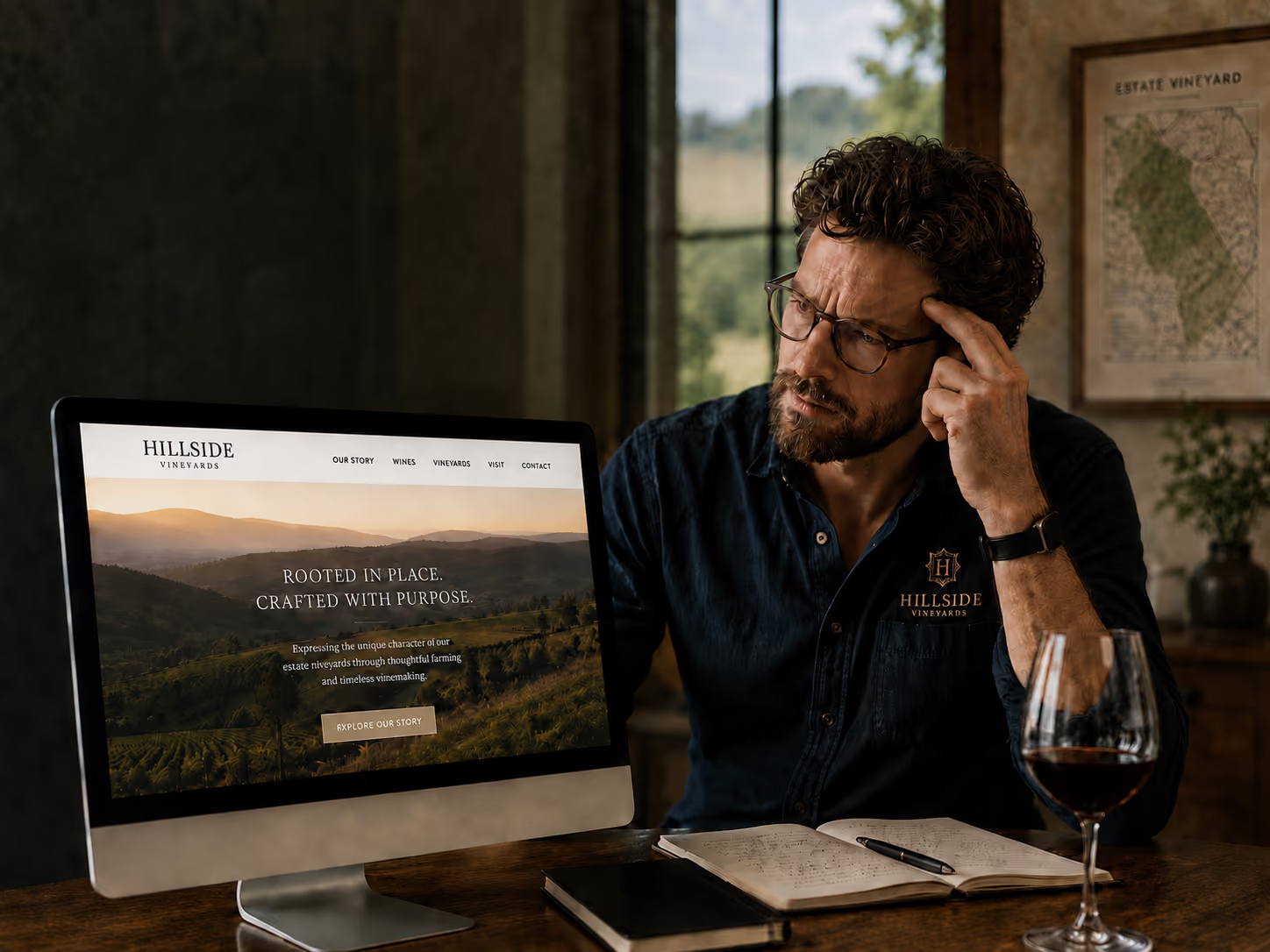
When we speak with a winery founder, a new prospect, or a producer trying to understand why the market is not responding as expected, we normally start with the simplest public evidence: the website, their social media content and winery presentations.
Not because a website tells the whole story. It does not. But it shows how much of the story has been translated for the market.
Within thirty seconds, a visitor should understand what the winery does, what makes it different, and why it matters. Not in technical detail. Not only in the way a Master of Wine would understand it. But clearly enough to know where the estate sits, what it believes, and why it is not the same as its neighbours.
In most cases, the answer is uncomfortable.
No, we cannot understand it.
And often, when we speak to the winery owner, they are not satisfied either, so before you design anything, ask yourself: can anyone understand what I mean in 30 seconds?
Fine wine is a detail-driven world. We care about site, slope, clone, rootstock, extraction, élevage, picking dates, canopy work, soil composition, producer intent, and vintage pressure. These details matter.
They are often the difference between a wine that is merely good and a wine that is culturally and commercially important.
But the market does not receive those details in the way the producer lives them.
A visitor arrives at a website with limited time, limited context, and often limited technical knowledge.
A buyer may already have twenty tabs open. A sommelier may be preparing a list update. A collector may have heard the name once, but not enough to remember why it matters.
The winery’s task is to make its story understandable, to find what makes them themselves.
This challenge is particularly important in fine wine. For mass-market wine, the commercial aim is often straightforward: be better known, more visible, and more immediately recognisable than the nearest competitor and, most importantly, being in the right place inside the supermarket. Think of the positioning used by Kylie Minogue rosé wines next to the cheese section at Waitrose during the height of summer.
In fine wine, the job is different. Recognition still matters, but so does explanation. The buyer wants to know why the wine deserves attention, why the estate has a point of view, and why the price makes sense.
The balance of technical depth depends on the audience. A sommelier wants more detail than a curious private client. An importer wants more commercial clarity than a journalist.
A collector may want heritage, rarity, and future relevance. The strongest winery content knows who it is speaking to.
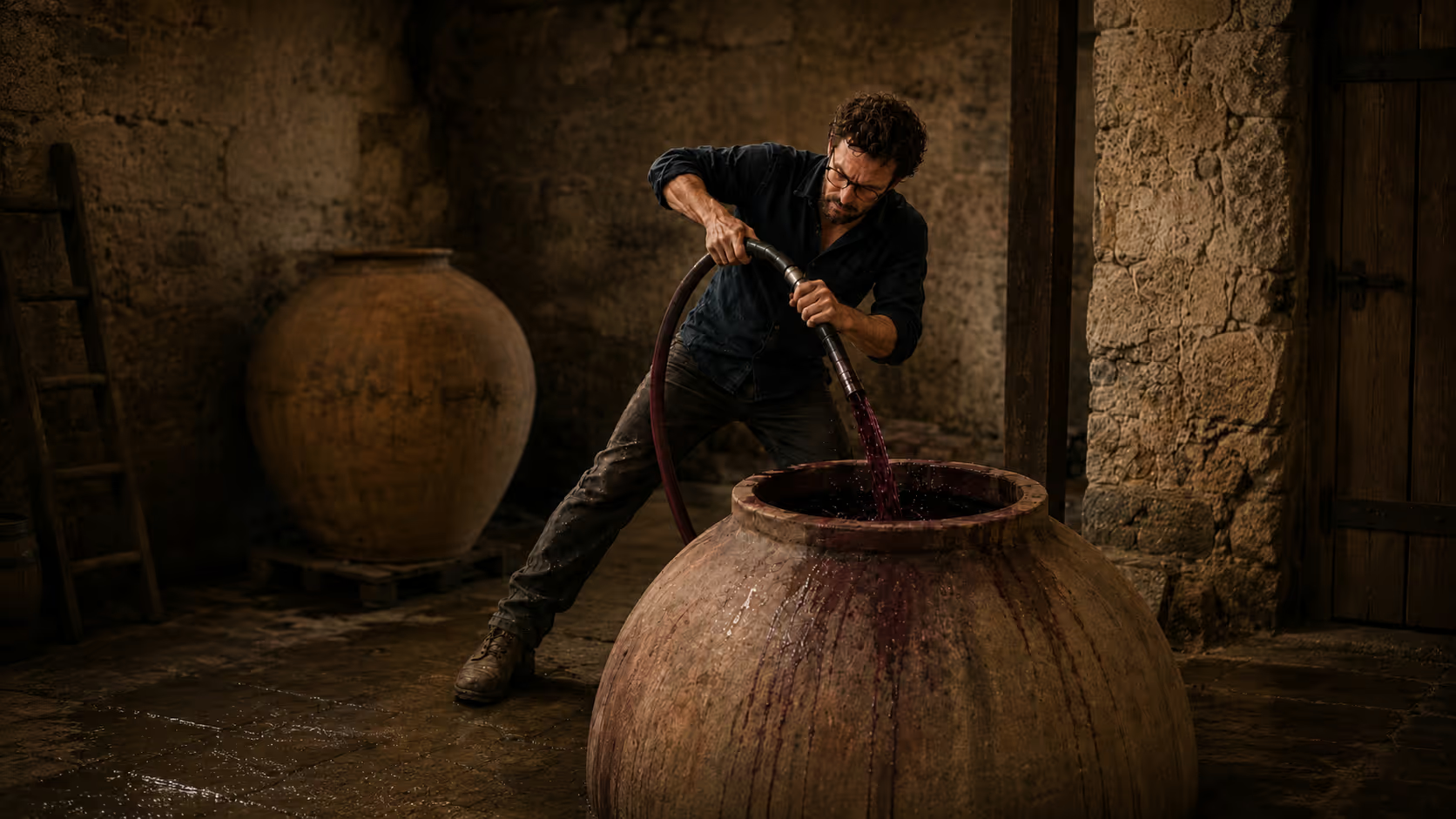

One of the most common failures in winery branding is the assumption that the wine will explain itself.
It rarely does.
A producer may have an extraordinary farming philosophy, a rare site, a distinctive winemaking approach, or a generational story with real emotional value. Yet online, this may appear as two vague paragraphs,
a list of wines, a few atmospheric images, and a technical sheet hidden somewhere on the site.
That is not enough.
If the website does not make the winery understandable, everyone needs to work too hard. And when people have to work too hard, you lose them.
This is where market value leaks.
We once spoke with one of Spain's most exciting producers. The wines were receiving major scores, including 99 and 100 points, and the critical attention was already there. The producer’s question was simple: what more do I need to do to make sure people understand it?
A quick look online showed the gap. The website carried very little content. A Google search revealed one of the most detailed explanations of the wines, written not by the estate itself but by a leading wine merchant. That in itself was positive: the merchant clearly loved the wines. But the producer felt they were missing part of the point.
That is exactly the strategic issue.
When someone else tells your story better than you do, you have lost control of it.

Every serious wine is an outcome.
It is the result of a place, a set of decisions, a farming culture, an economic constraint, a family belief,
a vineyard history, a stylistic choice, a unique vineyard, and a grape variety.
A website or presentation should help people understand that chain.
Not every detail needs to be visible at once. But the hierarchy must be clear. What should people know first? What should they feel next? What proof supports the claim? What makes the estate meaningfully different from the producer next door?
This is where brand clarity matters. Trellage’s work is built around the idea that the wine market is not short of quality, but short of clarity. The pitch deck states it directly: “Invisibility is now the biggest risk to premium wineries,” and frames brand clarity as the force that makes a wine “instantly understood and desired.”
For a winery, this is not cosmetic. It affects pricing power, distributor confidence, press interest,
and consumer memory.
Start with these three questions.
1. Can a website visitor understand your winery in 30 seconds?
They should be able to identify what you make, where you are, and why your estate matters.
2. Can a non-expert explain why you are different from your neighbours?
If the answer requires a technical lecture, the message is not yet working.
3. Can the trade repeat your story without rewriting it?
Your website, technical sheets, presentations, and content should give sommeliers, merchants, and distributors language they can use.

Thoughts from a Wine Marketing & PR Agency
Observations from the conversations, decisions and problems we see every day in wine.