


In wine commerce, importers do not buy wine simply because it is good. They buy wine when it helps them sell, manage risk, serve their customers, and strengthen their portfolio.
A familiar scene: a winery owner stands at a trade fair table with open bottles, polished technical sheets, and hope that somewhere in the room is the right wine importer. The wines are good, from a well-respected wine region, and the price list is ready.
Then the importer tastes, nods, says something polite, takes a card and disappears.
This is where many producers misunderstand distribution. They assume the problem is access. More meetings. More trade shows. More samples sent across markets.
But the problem is rarely the number of importers contacted. It is whether the winery gives the right importer (Emphasis added) a reason to care.

Most importers are bombarded with the same message: I make wine, you buy wine, a supposed win-win. They receive emails like this every day. Most say some version of the same thing: "Our wine is excellent, our terroir is unique, our scores are strong, our family is passionate, and our prices are competitive."
The moment an importer opens that email, they stop seeing the romance and start assessing the liquid (we like to use liquid for a wine that has not yet become a brand in the mind of anyone outside the winery). They begin asking themselves: Will this brand require too much explanation? Does it overlap with something already in my portfolio? Will it generate demand on its own? Will the winery support the market after the first shipment? Will the pricing survive taxes, duty, logistics, margins, promotions, and discounting pressure?
The hard truth is that many wineries approach importers as if their job is to discover quality. It is not. Their role is to curate a selection that ensures profitability.
The real question an importer asks is not, “Is this wine good?”
It is: “Can I sell this repeatedly, profitably, and with less friction than the next option?”
That question changes everything.
The importer has customers to satisfy. Independent merchants need wines that move. Restaurants need bottles that sommeliers can explain. Regional wholesalers need clarity, margin, logistics, and consistency. Premium specialists need a reason to allocate time and attention to one producer rather than another.
If your wine needs the founder in the room to make sense, a clear support plan helps move the importer toward a positive answer.
Fine wine needs detail. But detail must be structured. The importer needs to understand what the wine is, who it is for, why it belongs in the portfolio, and how it can be sold in the real world.
I keep finding the same misconception. Many producers believe export success is primarily about finding more importers. It is not.
Success comes from finding the right importer, then investing the time, resources, and commitment to make that relationship work.
A winery with ten passive importers may be less successful than a winery with three engaged partners. The ones that builds a reputation with you in the market, repeat orders, and a clear sense of place in the trade.
Distribution is not a numbers game. It is an alignment game.
The questions a winery should ask are simple:
Does the importer understand our positioning? Are we a strategic brand or just another SKU? Can we support their work in the market? Are our expectations realistic? Do we know which channels we actually belong in?
The best international partnerships are built long before the first order is placed.


A distributor is in the business of making money, so if your wine can help them with opening new accounts, create leads and support in the country, they’ll support you. We have seen it first-hand at Trellage with our clients.
Here are 6 common misconceptions.
A. They confuse finding an importer with building distribution
An importer saying yes is not success. Success is measured after three orders and account growth.
B. Send too many wines
A full portfolio can overwhelm, and often is not what the producer is missing in its portfolio. Often, one or two well-chosen wines make a stronger case than ten bottles without hierarchy.
D. Ignore portfolio overlap
If the importer already has a similar producer from the same region, grape, style, or price point, your wine must solve a specific gap.
E. Underestimate margin and logistics
Cellar-door pricing is not market pricing. Duty, shipping, warehousing, currency risk, and margins all decide whether the wine works.
F. Offer weak sales support
Importers need samples, but also need technical sheets, bottle images, concise producer copy, training notes, pricing logic, and a story their customers can repeat. Presence in the market is discussed in the next section.
G. They expect market work without committing to it
New markets need presence. If the producer will not visit, train, taste, follow up, or support key accounts, the importer carries the burden alone. This point may be the key to the success of many great wineries - A producer or a Brand Ambassador brings people closer to the wine and the story so that the account can repeat orders.
H. A bonus point if you made it this far
Talking to a leading MW, who wrote her dissertation on wine trips, over the next 3 months following the trip, those accounts have seen an increase in sales. The interesting thing is the length of time when a Sommellier orders, even after moving location, they continued ordering. The long tail effect lasted up to 4 years. Something to think about.
The best producers make themselves easier to say yes to. They arrive with a focused offer, credible pricing, useful assets, realistic expectations, and a clear reason why the wine deserves a place in the portfolio.
A trade-ready winery understands that distribution starts before the distributor and it makes itself known.
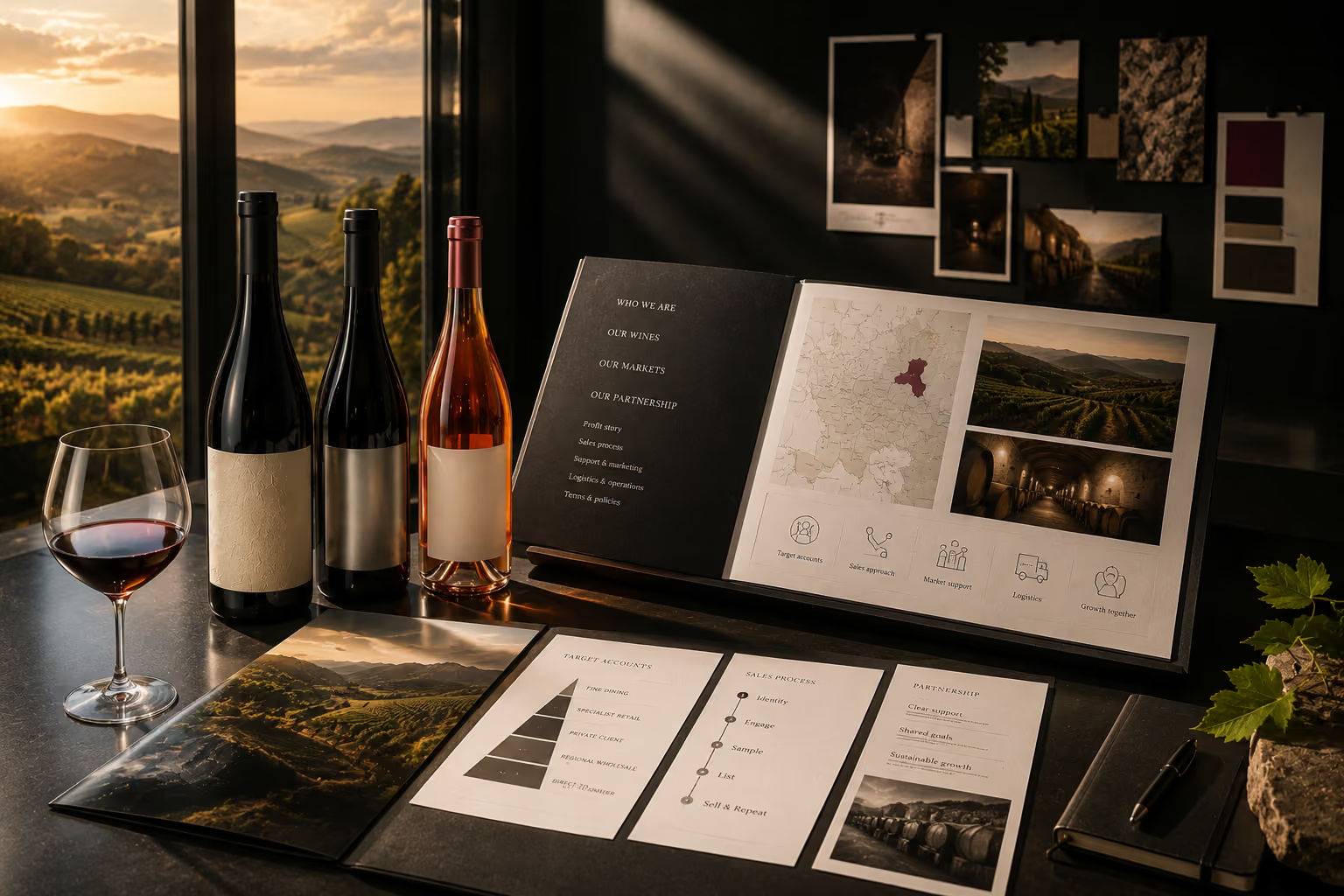
It builds the brand so it can be explained without the owner present. It selects wines carefully rather than overwhelming the buyer. It knows its target accounts. It understands whether it belongs in fine dining, specialist retail, private client allocation, regional wholesale, or direct-to-consumer first.
It also recognises that the importer is not the hero of the winery’s export fantasy. The importer is a partner with constraints.
A good importer pitch should answer the questions that are usually left unsaid. What is the profit story? What is the sales process? What support will you provide? What is the minimum order? Who handles logistics? What is the sample policy? What materials exist? What market work will you commit to? What makes the portfolio easy to sell?
At Trellage, we see distribution as the point where brand clarity meets commercial discipline.
A winery cannot expect the market to do the work of understanding it. Even the best importers will hesitate if the positioning is unclear.
The strongest wineries do not simply ask importers to believe in the wine. They give them the confidence to act. They understand that making great wine is only the first step in the much longer journey of making a winery, or a wine, known. Sassicaia took years to become the icon it is today.
Great wine may open the conversation. But clarity, support, and commercial alignment are what keep it alive.
Want to know if your winery is trade-ready?
Book a 15-minute discovery call.
Thoughts from a Wine Marketing & PR Agency
Observations from the conversations, decisions and problems we see every day in wine.